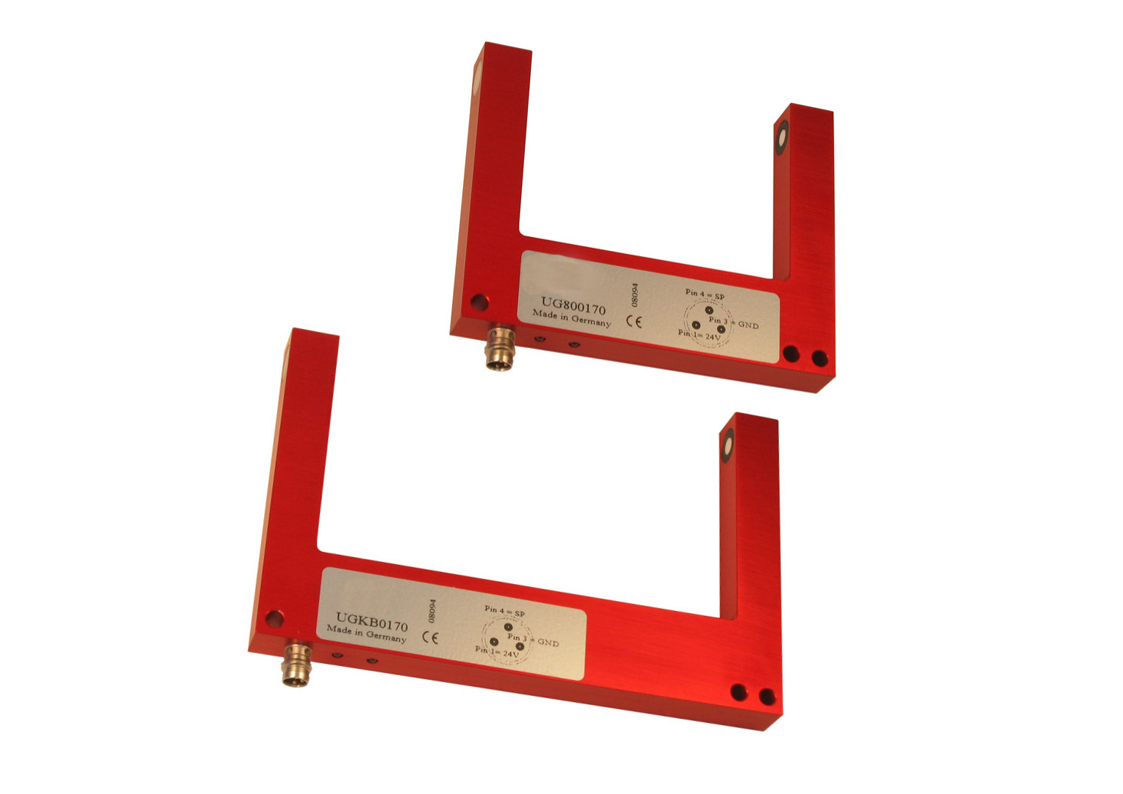
Ultrasonic sensors
The term "ultrasonic" comes from the field of acoustics and describes a sound whose frequencies are above the human hearing frequency range.
Ultrasonic comprises frequencies via 16kHz and is therefore no longer audible to the human ear. Sound with a frequency of around 1GHz and above is described as hypersonic.
Ultrasonic sensors detect all objects that reflect sound via sound waves in a contactless and wear-free manner. The possible range of such objects is therefore extremely wide, as they can be transparent, non-transparent, metallic, non-metallic, powdery, solid or liquid, with liquids and solid materials in particular reflecting sound very well. Since ultrasonic sensors also detect transparent objects, as already mentioned, the object color has no influence on their sound behavior and thus their functionality. Another feature is that ultrasonic sensors from ipf electronic can operate via particularly long ranges (up to 6,000 mm), making them suitable for level checks in large containers such as cisterns or silos, for example.
However, sound-absorbing materials such as absorbent cotton or soft foams can reduce the operating range of ultrasonic sensors. In addition, when mounting the devices, installation positions that lead to heavy dirt deposits or water droplets on the sensor surface or the so-called sound transducer must be avoided.
This white paper provides an overview via the classification of ultrasonic sensors, describes how the devices from ipf electronic work and shows concrete application examples from practice. In this context, one focus is on IO-Link ultrasonic sensors from ipf electronic and their particular advantages in a wide range of applications.