Flow sensors
Flow sensors play a central role in many industries for the monitoring, control, and safety of a wide variety of processes. They measure the flow rate, velocity, and temperature of liquid and gaseous media in closed systems, e.g. pipelines. The main functions of flow sensors include process monitoring and control, quality assurance, energy and resource savings, the provision of safety functions, as well as consumption measurement and documentation.
Process Monitoring and Control: Flow sensors provide real-time data via control loops on flow rates, and this data is often used to automatically control valves, pumps, or mixing processes.
Quality assurance: Consistent flow rates are often critical to product quality. For example, in the food industry, flow rate interferes with the consistency of beverages and pastes.
Energy and Resource Efficiency: Continuous flow measurements help reliably recognize energy losses and leaks. Eliminating the root causes and optimizing the consumption of gas, water, and compressed air, e.g., leads to sustainable cost reductions and a more targeted use of valuable resources.
Safety functions: A flow that is too high or too low can sometimes be problematic, e.g. in cooling circuits. Flow sensors can trigger alarms in a timely manner and automatically shut down systems.
Consumption Measurement and Documentation: In many utility networks, flow sensors are used to measure consumption, and the measured values recorded and documented are becoming increasingly important for purposes such as sustainability reporting (CSRD—Corporate Sustainability Reporting Directive) or as part of an energy management system in accordance with ISO 50001.
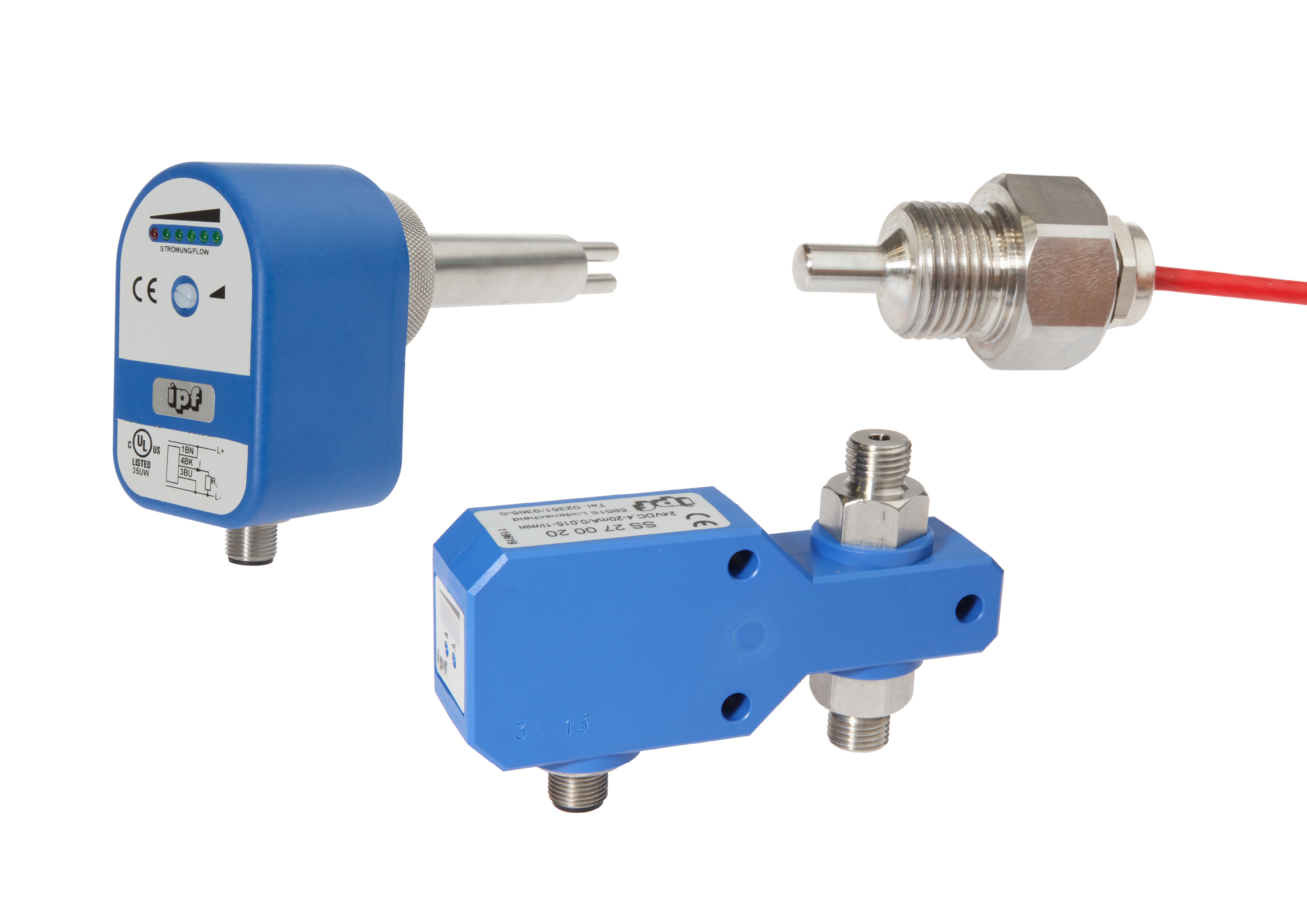
ipf electronic is significantly expanding its portfolio of flow sensors, so that a wide selection of diverse devices with various functions for a wide range of applications is now available.
In this context, this white paper provides an initial overview of the key features of several specific flow sensors from ipf electronic and describes the particular advantages of the individual device series with regard to their potential applications. Another topic will be the targeted detection of leaks in compressed air and vacuum systems.
Downloads to the article